
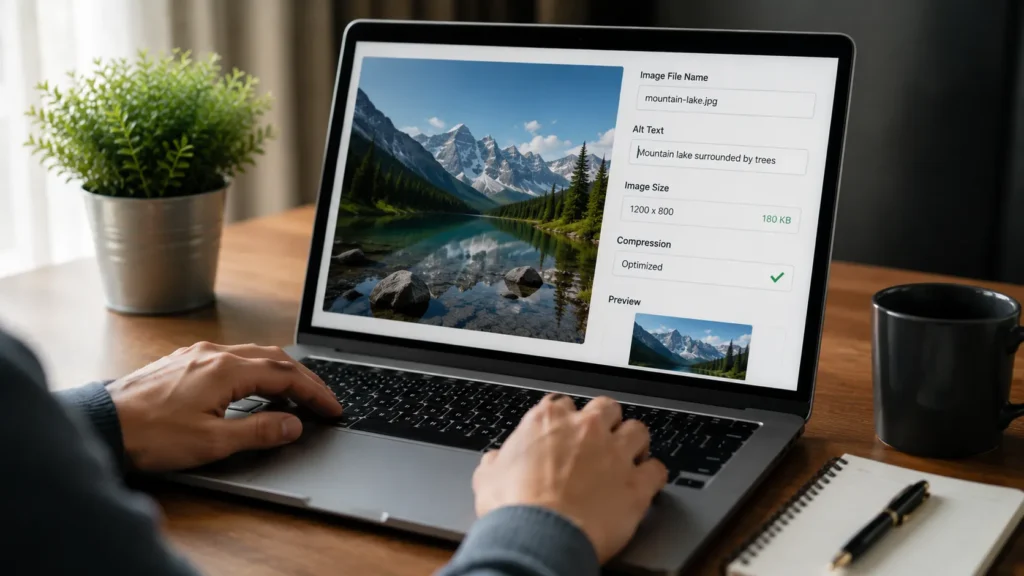
Images play a major role in search visibility. When we optimize images correctly, they can appear in Google Search and Google Images. According to Google Search Central, image optimization improves crawling and helps search engines understand page content. Proper image SEO also enhances page speed and user experience. These factors support better rankings and engagement.
Modern websites rely heavily on visuals. Large files and missing descriptions can reduce visibility. We need a balanced approach that combines performance and accessibility. Image optimization involves choosing suitable formats, compressing files, and adding descriptive metadata. These actions help search engines index images efficiently. They also improve loading times on desktop and mobile devices. By following proven practices, we can optimize images effectively and strengthen our overall SEO strategy.
Why Optimize Images Matters for SEO
Google Uses Images to Understand Content
Google analyzes image file names, alt text, and surrounding content. These signals help determine relevance. Google Images also drives significant traffic for publishers and businesses. Well-optimized visuals increase the chances of appearing in image search results.
Fast-loading pages contribute to a better experience. Research from Google found that bounce rates rise sharply when pages load slowly. Large image files often cause delays. Therefore, we should optimize images to improve speed and usability.
Key benefits include:
- Better visibility in Google Images.
- Faster page loading times.
- Improved accessibility for users.
- Enhanced mobile experience.
- Increased organic traffic.
Choose the Right Image Format
Selecting Formats Based on Purpose
Different image formats serve different needs. Choosing the proper format helps maintain quality while reducing file size. Google supports several common formats.
| Image Format | Best Use | Strengths |
|---|---|---|
| JPEG | Photographs | Small file sizes and broad compatibility |
| PNG | Graphics and logos | Supports transparency |
| WebP | Websites and blogs | Smaller files with high quality |
| SVG | Icons and illustrations | Scales without quality loss |
| GIF | Simple animations | Wide browser support |
Google introduced WebP to improve web performance. WebP files often provide smaller sizes than JPEG and PNG. Using modern formats helps us optimize images without sacrificing quality.
Maintain Proper Dimensions
Oversized files waste bandwidth. Images should match the display size on the page. Responsive images ensure good performance across devices. Proper dimensions reduce unnecessary loading and improve Core Web Vitals.
Use Descriptive File Names and Alt Text
File Names Help Search Engines
Generic names like IMG12345.jpg provide little value. Descriptive names offer useful context. For example, “blue-running-shoes.jpg” communicates the image content clearly.
File naming best practices include:
- Use lowercase letters.
- Separate words with hyphens.
- Include relevant keywords naturally.
- Avoid unnecessary characters.
These practices help us optimize images while maintaining readability.
Alt Text Improves Accessibility
Alt text describes images for screen readers and search engines. Google recommends concise and meaningful descriptions. Alt text should explain the image naturally instead of stuffing keywords.
For example:
- Weak alt text: “image.”
- Better alt text: “Woman using photo editing software on a laptop.”
Well-written alt text improves accessibility and supports image indexing.
Compress Images and Improve Performance
Reduce File Size Without Losing Quality
Compression removes unnecessary data while preserving appearance. Tools such as TinyPNG, Adobe Express, and Squoosh help reduce file sizes. Smaller images load faster and consume less bandwidth.
Page speed directly affects user experience. Google includes Core Web Vitals among its ranking signals. Optimized images support better performance scores.
Important compression practices include:
- Resize images before uploading.
- Use lossless compression for graphics.
- Apply moderate lossy compression for photos.
- Avoid uploading raw camera files.
Implement Lazy Loading
Lazy loading delays image loading until users scroll near them. This method reduces initial page weight. WordPress introduced native lazy loading support in version 5.5 on August 11, 2020. Many websites now use this feature to enhance speed.
When we optimize images with lazy loading, pages become more efficient and mobile-friendly. Get started with our in-depth resource on Step-by-Step SEO Audit for Better Rankings.
Advanced Techniques for Better Image Visibility
Create Image Sitemaps
Image sitemaps provide additional information to Google. They help search engines discover images that may not appear through regular crawling. Websites with extensive media libraries benefit from dedicated image sitemaps.
Structured data also improves understanding. Product pages, recipes, and articles can use schema markup to provide richer information.
Add Relevant Context Around Images
Google evaluates surrounding text to determine relevance. Images should support the content nearby. Captions and headings offer additional context. This strategy helps search engines connect visuals with the page topic.
Based on recommendations from SEO specialists and Google Search Central, contextual relevance remains an important factor. Original visuals often perform better than stock photos because they provide unique value.
Conclusion
Image optimization combines performance, accessibility, and SEO. Strong image practices help pages load faster and improve user experience. Choosing suitable formats, compressing files, and writing descriptive alt text provide long-term benefits. We should also use responsive images, lazy loading, and image sitemaps to strengthen visibility.
When we optimize images consistently, Google gains a better understanding of our content. These improvements increase opportunities for appearing in Google Images and generating more organic traffic. A thoughtful image strategy supports sustainable growth and better search performance over time.